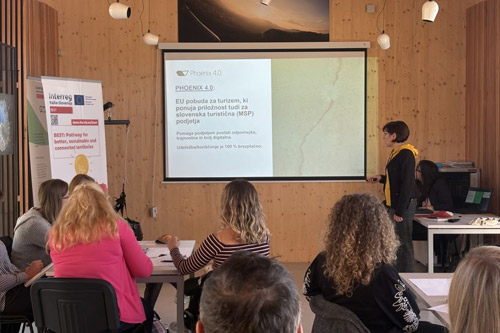

October 2025 — On World Tourism Day, the Tourism 4.0 initiative, in collaboration with the Association of Slovenian Municipalities, hosted a workshop exploring how data can empower communities, destinations, and public institutions to make smarter, more sustainable tourism decisions.
The event brought together local authorities, tourism managers, and experts to discuss real-world challenges and opportunities in data-driven tourism planning — with a focus on local implementation, cross-sectoral collaboration, and actionable insights.
From Data to Decisions: Lessons from Slovenian Communities
The workshop featured practical insights from three leading local examples:
-
Zeleni Kras – Regional approach to tourism analytics and data-based planning
-
Bohinj – Real-time monitoring of visitor flows and congestion management
-
Ljubljana – Strategic use of data to guide tourist movement and reduce pressure on sensitive areas
These case studies highlighted how even small municipalities can begin their data journey — and how early adoption leads to tangible benefits in sustainability, visitor experience, and local well-being.
Key Challenges and Opportunities
Participants shared their experiences, challenges, and aspirations — revealing common barriers such as:
-
Limited technical capacity
-
Data silos across institutions
-
Lack of funding and dedicated personnel
-
Institutional resistance to change
Yet, the discussion also uncovered strong motivation to progress. Many emphasized that starting small is the key — whether through pilot projects, open data sharing, or collaboration with regional partners.
The Role of Flows: Connecting Data for Smarter Decisions
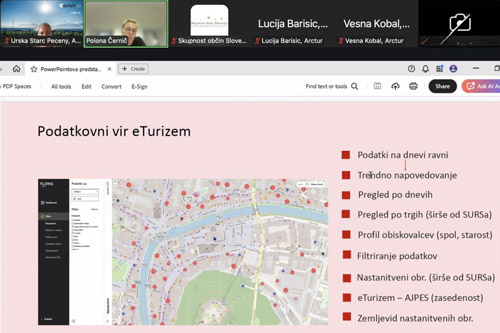
The Flows platform, developed by Arctur, was introduced as a practical tool to support this transition. Flows integrates local and national data sources into a unified, user-friendly interface — enabling real-time monitoring, trend analysis, and evidence-based decision-making at the municipal level.
By combining data from traffic sensors, mobility apps, accommodation bookings, and environmental indicators, Flows empowers local authorities to:
-
Monitor visitor pressure in real time
-
Adjust services and infrastructure proactively
-
Communicate transparently with residents and tourists
-
Plan long-term strategies based on facts, not assumptions