
The SEISMEC (Smart, Efficient, and Integrated Systems for Mobility and Tourism in Europe) project held its 3rd General Assembly Meeting at the Centre for Research & Technology Hellas (CERTH) in Thessaloniki, bringing together partners from across Europe to review progress, align work plans, and strengthen collaboration.
The two-day event served as a key milestone in the project’s implementation phase, with partners discussing pilot developments, updating deliverables, and preparing for upcoming activities across all work packages.
Highlight: FLOWS Green Karst Pilot Progress
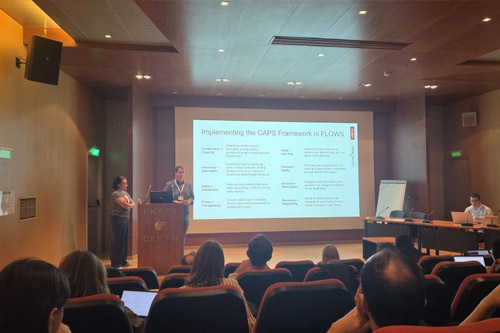
A central focus of the meeting was the FLOWS Green Karst Pilot, led by RRA Zeleni Kras in Slovenia. The session featured a joint presentation by Vesna Kobal from Arctur – Tourism 4.0 and Dejan Iskra from RRA Zeleni Kras, who jointly showcased the pilot’s progress in implementing the CAPS (Climate-Adaptive Planning and Smart Tourism) Framework.
Their presentation highlighted how the integration of real-time environmental data, visitor flow monitoring, and adaptive management tools is enabling evidence-based decision-making for sustainable tourism in ecologically sensitive Karst areas. The pilot demonstrates a practical model for balancing conservation goals with tourism development, using digital innovation to enhance both environmental protection and visitor experience.
The pilot leverages a network of IoT sensors, remote monitoring systems, and digital dashboards to collect data on:
-
Soil moisture and erosion levels
-
Visitor flow and density in protected zones
-
Microclimate changes and weather patterns
-
Biodiversity indicators
This data enables dynamic decision-making — for example, adjusting visitor access in real time during high-risk periods (e.g., heavy rainfall or fragile vegetation phases), optimizing trail usage, and minimizing environmental impact.
By combining digital monitoring with participatory planning, the FLOWS pilot not only helps preserve the region’s unique karst landscape — including caves, underground rivers, and endemic species — but also enhances the quality of the visitor experience through personalized, sustainable itineraries and real-time information.
The project demonstrates how smart tourism systems can be designed not in opposition to nature, but in harmony with it, offering a scalable model for other protected and ecologically vulnerable destinations across Europe.
Through collaborative piloting, including the FLOWS Green Karst Pilot in Slovenia, SEISMEC is demonstrating how digital frameworks like CAPS (Climate-Adaptive Planning and Smart Tourism) can be applied in practice to support sustainable development in sensitive and high-value regions.