
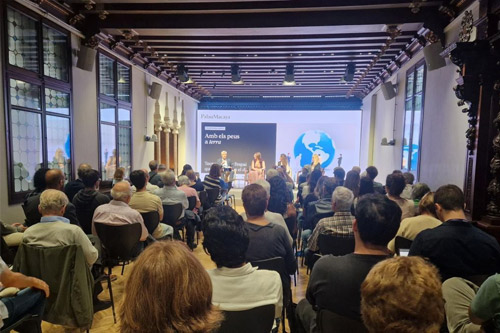
At the heart of World Space Week 2025, Urska Starc Peceny, Head of the Tourism 4.0 Initiative at Arctur, participated in the round table “With Our Feet on the Earth. Space Technologies That Improve Our Daily Lives”, co-organized by la Caixa Foundation and Fundació KIMbcn, in collaboration with the Institute of Space Studies of Catalonia (IEEC).
The event brought together experts, innovators, and policymakers to explore how space-based technologies are already making a tangible impact on everyday life — from climate monitoring and disaster prevention to sustainable urban and tourism development.
Bridging Space Innovation with Ground-Level Impact
Urska Starc Peceny highlighted the growing role of satellite data in transforming the tourism sector, emphasizing its potential to support smarter, more sustainable, and community-focused decision-making.
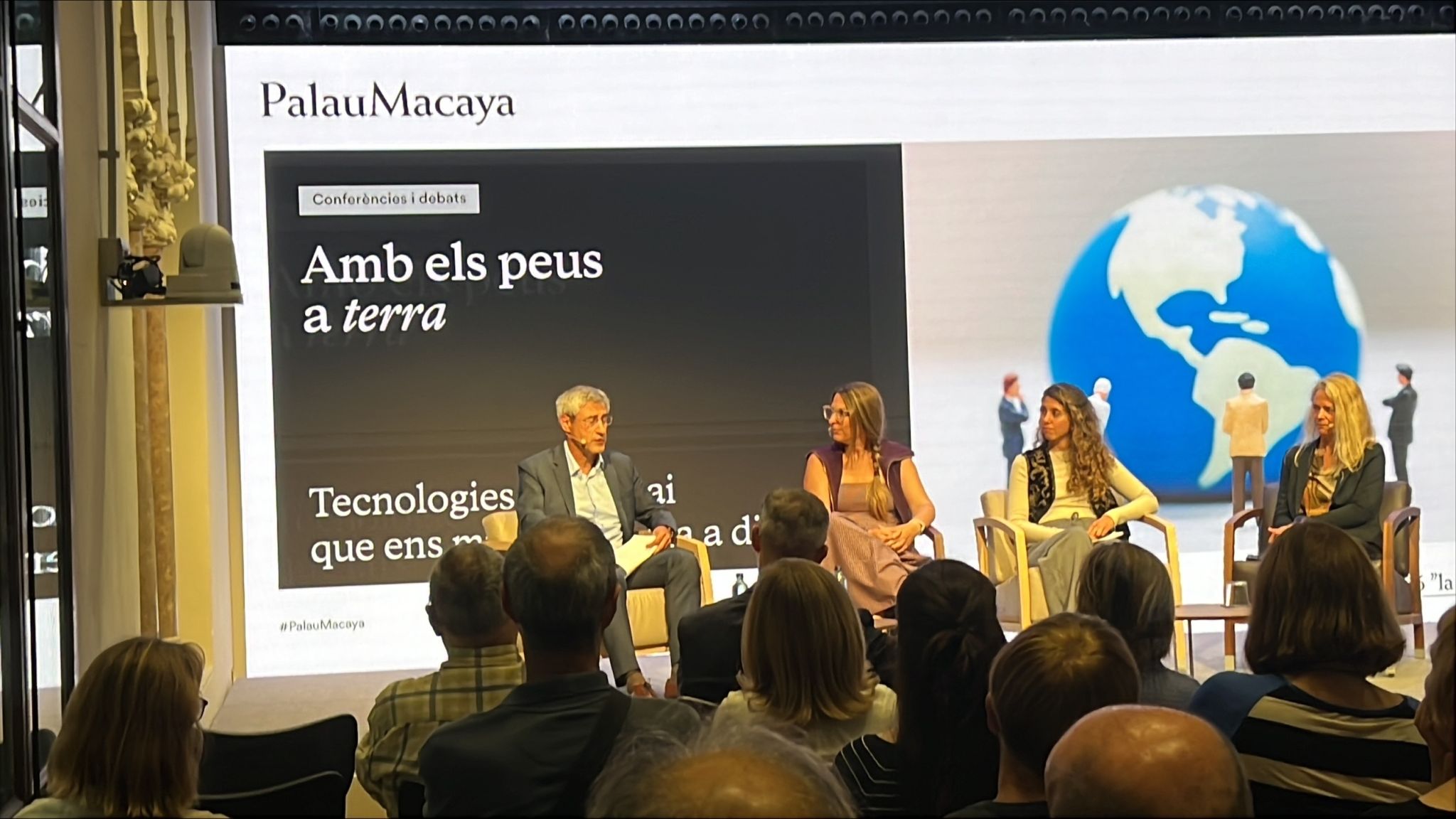
During the discussion, she emphasized the growing importance of satellite data in supporting decision-making in the tourism sector, stating:
“Satellite data is increasingly helping us make better decisions for the tourism sector and contribute to the well-being of local communities.”
Her contribution highlighted how space technologies can support sustainable and responsible tourism practices — particularly in monitoring environmental conditions, improving planning, and enhancing resilience in destination management.
Key Reflections from the Round Table
The event featured impactful contributions from leading voices across science, innovation, and public engagement, representing a diverse and interdisciplinary coalition committed to shaping a more inclusive, sustainable, and technology-driven future. Here are some of the other reflections from the speakers:
-
Ramon Pastor, President of Fundació KIMbcn:
“Today we celebrate a way of understanding innovation: one that starts from real needs and returns to society in the form of solutions.”
-
Estel Blay, Program Manager at IEEC and Commander of Hypatia III:
“Why, when we think of an astronaut, do we think of a man? We need female role models in the space sector.”
Her statement underscored the urgent need for greater gender diversity and visibility in science and space exploration.
-
Anna Ruiz Ayala, Science Communicator and Public Engagement Specialist:
“There is always a barrier between science and citizens. Dissemination plays a key role in overcoming this barrier and empowering us. This is a fundamental aspect for the space sector.”
She emphasized the importance of science communication in building public trust, fostering inclusion, and ensuring that innovation serves everyone.
About the Initiative
The “El món que ve” cycle, led by la Caixa and KIMbcn, continues to drive public debate on how emerging technologies — from AI to space systems — can be harnessed for the common good. The 2025 edition focused on climate resilience, digital inclusion, and the human dimension of innovation, reinforcing the idea that technology must serve society — not the other way around.